I became aware of the incident when Laci Horner contacted me through Facebook about a week after the dog was lost.
The incident fits all the criteria for reporting by Hawaiian Air – Victor was traveling with his owners and was lost for “more than a few hours.”
Why didn’t Hawaiian Air report it??
I don’t have an answer for that, but I think most of you know what I’m thinking… they didn’t report it because THERE IS NO ONE TO MAKE SURE THAT ALL INCIDENTS ARE REPORTED.
How many more incidents actually happened in March that weren’t reported? WHO KNOWS!!!
I asked our contact at the Department of Transportation to explain how the DoT cross-checks to make sure that airlines are reporting all incidents that occurred.
He replied that he would check into this, but failed to answer my question about cross-checking.
Shocking. NOT.
If you hear about an incident of a pet being lost, injured or killed while in the care of an airline, please contact me through this blog, through our Facebook page (Jack the Cat is Lost in AA Baggage at JFK) or call me or drop me a text at 305-582-5884.
WHERE IS JACK? INC. has created a spreadsheet that serves as a database for of all Pet Air Incidents that the DOT has reported since the current rule went into effect in May 2005. We update this spreadsheet every month with the latest incidents. (Particular thanks to Bonnie Wagner-Westbrook for her dedication in creating and updating this inventory!)
Below please find the latest update to our spreadsheet (through incidents reported in February 2013) , which now details 354 cases of animals being lost, injured or killed while in the care of the airlines during domestic (U.S.) travel. This only includes animals who were lost, injured or killed while traveling with their guardian – meaning no incidents involving an animal who was lost, injured or killed while traveling for breeding or for commercial sale was recorded.
Please feel free to review and share this information widely. If using this information for commercial purposes, please give credit to WHERE IS JACK? INC.
Click here to download the most complete inventory: PetAirIncInv0213
Dear Readers… this is Part 2 of a what turned out to be an incredibly long post about what we are learning (and have learned) during the search for Xiaowha, a cat that was lost at JFK airport in October. For Part I, click here. Part 3 will be posted tomorrow…
LESSON 2: LOSING AN ANIMAL IN AN AIRPORT IS NO DIFFERENT THAN LOSING AN ANIMAL IN THE GRAND CANYON.
When Jack went missing, I was shocked when Karen texted me. We spoke seconds later. She told me she was down in the baggage area where he had gone missing… and she had been looking for him for the previous 15 minutes but with no luck. “This is HUGE down here. HUGE. I can’t even describe it.”
And I understood. But I didn’t REALLY understand. I didn’t truly understand until the good folks at JFK took us into the baggage system to look for Xiaohwa.
Now I need to make a comparison here… Think about the Grand Canyon. You see pictures of the Grand Canyon and you understand it’s huge, but what a picture conveys to you is about 1/1 millionth of the sheer size, beauty and majesty of actually being there. Still, it’s better than not knowing anything about the Grand Canyon at all.
The baggage system at any major airport is kind of like the Grand Canyon – you know it’s big and complex, but you can’t even really begin to understand the hugeness and the complexity until you’re there. And a picture is a start, but again – it conveys about 1/1 millionth of the reality.
Below you’ll find a picture of the baggage system at Denver Airport – one of the newest and supposedly most efficient baggage systems in the U.S. The picture gives you some idea of the sheer enormity and the complexity of the system – but remember that the Denver Airport is about 20% of the size of JFK. And the JFK system is much older – less efficient and with even more nooks and crannies.
Take a good look at this picture – there are about a million places for a kitty to hide. And many of them – maybe most of them – are in motion, with belts and cogs and motors and all kinds of noise. Kitties and moving parts are not usually a good combination. Particularly for a scared kitty who’s trying to be in a small, safe, quiet place.
And then multiply this picture by a thousand – because this is what a space the size of a football field looks like. And ground to ceiling is about 25 feet. With machinery from floor to just below the ceiling.
AND what you don’t see here is that there are also hundreds of ways to get outside. Because the baggage is not staying in the building, there are huge open doors (really, open WALLS) to let big trucks carry baggage to and from this mechanical hell out into the gate areas — which of course are open to the runways. Which are then open to the whole world… the fences that surround airports don’t really mean much to a frightened cat. (And they aren’t even a good way to contain a frightened lost dog.)
And the baggage area is just one part of the airport. Jack was in the ceiling the whole time – but when he fell out in the Customs & Border Patrol office, he was a loooooooong way from where his journey began.
Not to mention – if anyone does find it, what happens then? 1/100 people that see it will make the effort to catch it and submit it to the right authorities in the airport (and you know how hard it is to catch a kitty that doesn’t want to be caught without knowing all their pet food info first) – since most people tend to be in a rush in an airport. An animal that is lost at an airport might as well be lost in the Grand Canyon. Especially if there is no one searching for them from the moment they are lost.
During the Jack search, so many well-intentioned people were telling us what to do and where to look (look up! look under!). And we did everything we could do – largely because so many kind and devoted people put in time and effort over the course of 61 days. But the combination of the complexity of searching for a lost cat in a HUGE building with an untold number of nooks and crannies AND not even having access to search because of airport security guidelines made the situation nearly impossible.
And Xiaohwa has given us the opportunity to learn even more about how incredibly difficult it is to look for an animal lost at an airport.
I just hope this will be our last opportunity to learn these lessons… though history suggests that will not be the case.

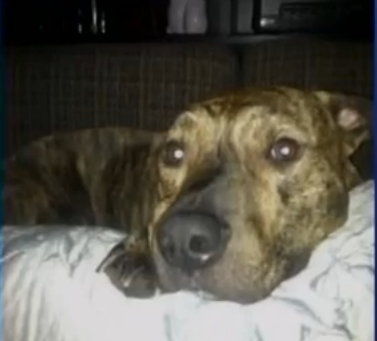 On March 24, the Horner family was moving from Honolulu to Los Angeles with their two dogs when one of the dogs – Victor – escaped when his crate fell from the loading ramp. Victor’s escape received media coverage from KHON, as did his reunion with his owner one month later.

 Where is Jack?